How UA Managers Use UGC Ads to Lower App CPI in 2026
UA managers are under pressure to find app install creative that feels native, scales fast, and does not burn out in a week. UGC ads are winning in 2026 because they combine trust, speed, and enough variation to keep CPIs under control.
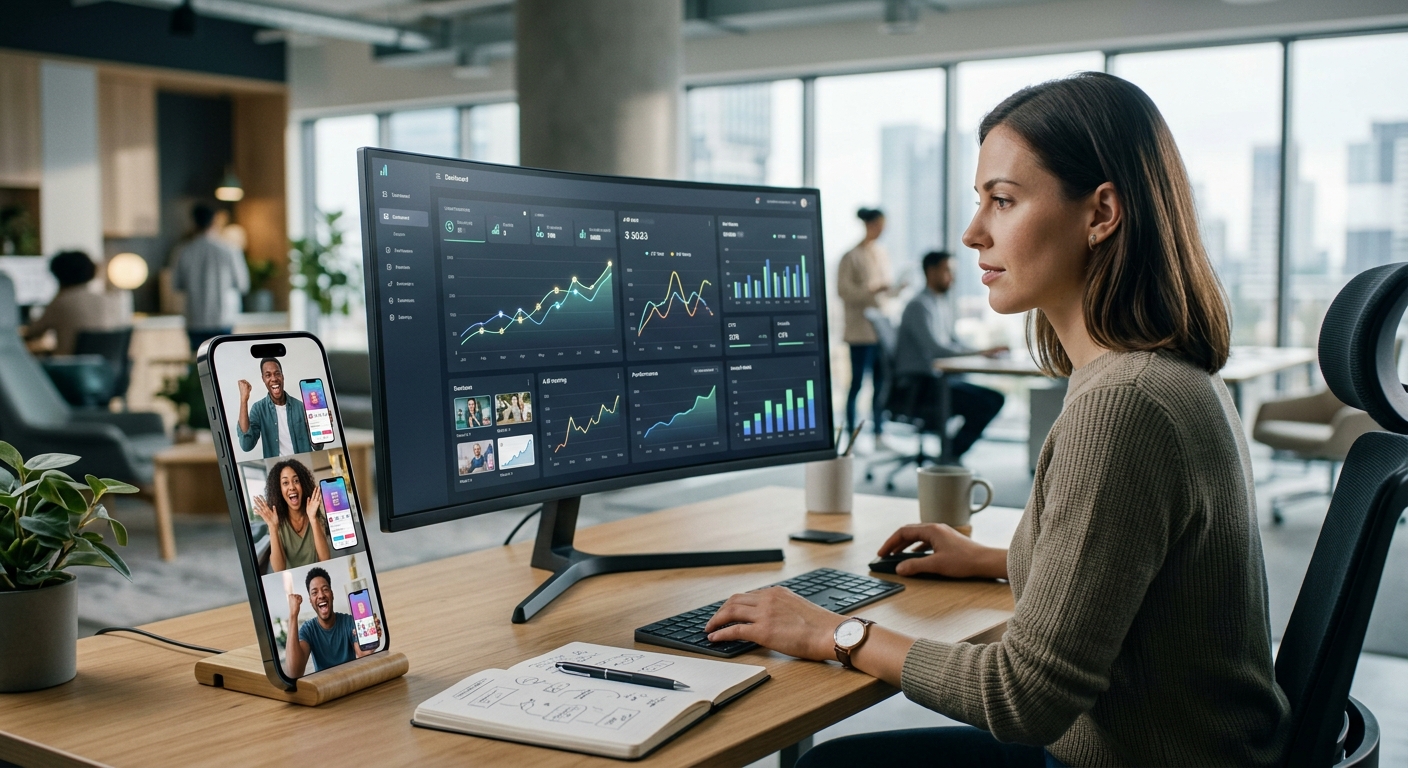
UA manager UGC ads for app installs in 2026 are creator-style video ads built to reduce cost per install by making paid social look like native content. They usually outperform over-produced studio ads on attention and trust. That matters because install campaigns now live or die on the first one to three seconds, especially on TikTok, Reels, and Meta feeds where users swipe fast and creative fatigue shows up early.
Why UA managers keep shifting budget into UGC
User acquisition teams are not buying UGC because it is trendy. They are buying it because the economics make sense.
UGC-style creative solves that by matching the environment. A creator talking straight to camera, showing a real reaction, or demonstrating an app in the first frame feels closer to a post than an ad. Across widely cited UGC benchmarks, campaigns using UGC regularly report up to 29% higher web conversions than campaigns without it. The exact lift varies by vertical, but the direction is consistent: authentic-looking creative tends to win more attention.
For UA managers, the implication is simple. Lower thumb-stop friction often means higher click-through rate, better install page visits, and lower CPI if the rest of the funnel holds.
What UGC app install ads actually look like in 2026
The best app install UGC does not look random. It looks casual, but it is built with intent. Usually the structure is:
1. A fast pattern break
The first second has to earn the next two. Common examples:
- A direct pain-point hook, like "I was wasting 2 hours a day planning meals"
- A visual reveal of the app before the logo
- A reaction shot with a strong facial expression
- A specific promise, like "This budgeting app cut my overspending in 7 days"
2. One core use case
Too many app ads try to explain the whole product. That tanks retention. The better play is one clear job to be done: track calories, split expenses, learn vocabulary, organize habits, edit photos faster.
3. Native proof
Proof in UGC is not a glossy claim slide. It is a screen recording, a quick before-and-after, a notification moment, or a creator saying the result in plain English.
4. A direct CTA
For install campaigns, ambiguity costs money. "Try it free," "Download the app," or "Start your 7-day plan" usually beats softer endings.
The KPI stack UA managers care about
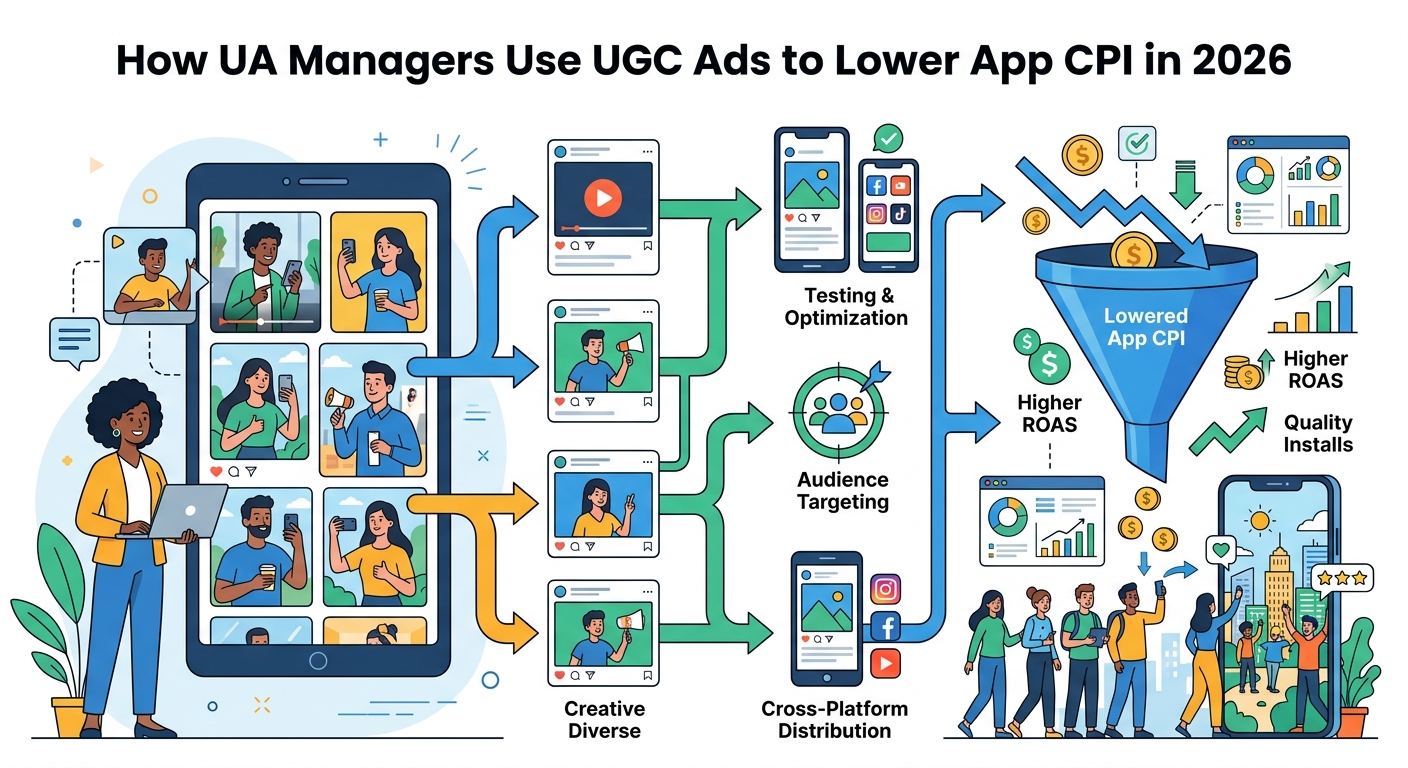
Creators sometimes think brands only care whether a video "looks good." UA managers care about numbers. The creative exists to move a chain of metrics.
The usual scorecard looks like this:
- Hook rate or hold rate in the first 1 to 3 seconds
- CTR from feed to store page
- CVR from click to install
- CPI or CPA once installs start landing
- Creative fatigue over days 3, 7, and 14
That last one matters more than most new creators realize. In mobile performance marketing, a winning concept can weaken fast. Some mobile ad teams report copycat or repetitive creatives losing momentum within the first 7 days. So a creator who can deliver one good video is useful. A creator who can deliver five believable variations of the same winning angle is much more valuable.
What UA managers want from UGC creators
If you are a UGC creator and want better app brand deals, think like the buyer. A UA manager is usually balancing spend targets, install volume, and creative refresh pressure every week. They do not want vague "lifestyle content." They want assets that can enter a test plan.
Here is what usually gets you rebooked:
Clear briefs turned into usable variations
A strong brief might ask for:
- 3 hooks
- 2 CTAs
- 1 pain point angle
- 1 aspiration angle
- 15-second and 30-second cuts
That is not busywork. It is how a team builds a testing matrix without producing from scratch every time.
Raw footage and modular assets
UA teams often want to re-edit top performers. That means raw clips, alternate intros, clean screen recordings, and extra b-roll are all valuable add-ons, not freebies.
Comfort with scripts that sound unscripted
This is the skill gap. The best UGC creators can take a structured performance script and make it feel natural. That is why authentic delivery is still hard to fake at scale.
How to make UGC that performs for app installs
If you create for app brands, build around performance, not aesthetics.
Use numbers when possible
Specific numbers make claims feel real. "I saved $43 this week," "I finished my lesson streak for 21 days," or "I tracked every expense in under 2 minutes" is stronger than "this helped a lot."
Show the app early
Many creators wait too long to reveal the product. For app install ads, early product visibility improves relevance. Usually by second 2 or 3, the viewer should understand what category the app is in.
Keep scenes tight
Most winning install creatives are simple. One face, one phone, one problem, one payoff. Extra scene changes can work, but clutter usually hurts.
Why content systems beat one-off creators
A lot of app brands start with freelancer outreach, then hit the same wall: sourcing takes too long, quality varies, and the refresh cadence cannot keep up with spend.
That is why content factories and subscription models are gaining ground. If a UA team needs 20 or more fresh creatives per month, the bottleneck is no longer ideas. It is production ops.
This is also where DansUGC has a real angle. Instead of treating UGC as random creator luck, it turns it into a repeatable supply system for app studios that need constant variation. If you have not read it yet, the post on how to build a UGC content factory explains why volume plus consistency beats occasional viral winners. The breakdown on UGC creative refresh for TikTok ads is also worth reading if you want to understand fatigue from the buyer side. For creators still tightening their positioning, this guide to a UGC creator portfolio helps you present yourself like a performance asset, not just a content hobbyist.
A simple 2026 playbook for creators who want app deals
If you want to work with UA managers, do these five things:
- Pick 2 to 3 app categories you can speak about naturally, like fintech, fitness, productivity, or language learning.
- Build 6 to 10 sample ads with different hooks, not just different outfits.
- Offer packages, not single videos. UA managers think in testing batches.
- Price raw footage and usage clearly so there is no friction when a winner needs scaling.
- Talk in outcomes like CTR, CVR, hook rate, and CPI, even if you are sharing spec work.
That last point matters. You do not need to fake results, but you should show that you understand what the buyer is optimizing for.
The real opportunity for UGC creators
The opportunity in 2026 is not just "make content for brands." It is become the creator who understands paid acquisition. That makes you rarer and easier to brief.
Brands can find plenty of people who look good on camera. Fewer creators understand that a 15-second script may need 3 hook options, 2 emotional angles, and enough modular footage to survive 14 days of paid spend.
That is the gap. If you can fill it, you become much more valuable to app teams. And if brands need the infrastructure around that process, DansUGC is already positioned around repeatable, real-human UGC production instead of synthetic filler.
FAQ
What are UA manager UGC ads for app installs in 2026?
UA manager UGC ads for app installs in 2026 are creator-style paid social videos designed to lower CPI and improve install volume. They usually combine a strong first-second hook, clear app demonstration, native proof, and a direct download CTA.
Why do UGC ads often beat polished app ads?
Because they feel more native to TikTok, Reels, and Meta feeds. Users scroll past obvious ads quickly, while creator-style videos can earn attention faster and build more trust in the first few seconds.
What metrics matter most for app install UGC?
The core metrics are early hold rate, CTR, click-to-install conversion rate, CPI, and fatigue over time. A video that looks good but cannot maintain those numbers is not a winner.
How many creative variations should a UGC creator deliver?
For app brands, 3 to 5 hook variations plus alternate body lines and CTAs is a strong starting point. UA teams usually want multiple testable angles from one brief so they can refresh faster without restarting production.
How can UGC creators get hired by UA managers?
Show that you understand performance marketing, not just content creation. Build portfolio samples for app categories, package your work in testing batches, and speak clearly about hooks, CTR, CVR, usage rights, and creative refresh cycles.
Ready to get UGC videos for your brand?
Real human creators, 48-hour delivery, full commercial rights. Starting at $8/video.